How to Clean Mini Split Filters (And How Often)
If there's one maintenance task that makes the biggest difference for the least effort, it's cleaning your mini split filters. It takes about 5 minutes, requires zero tools, and has an immediate impact on air quality, system efficiency, and your energy bill.
Yet it's the most commonly neglected task. Surveys of HVAC service calls show that over 40% of performance complaints trace back to dirty filters, a problem the homeowner could have prevented for free.
Let's walk through exactly how to clean every type of mini split filter, how often you should do it, and how to tell when a filter needs attention.
Understanding Your Mini Split's Filters
Most mini split indoor units have two layers of filtration:
Primary Mesh Filters (Washable)
These are the large, flexible mesh screens that catch dust, pet hair, and larger particles. Every mini split has them. They're designed to be removed and washed regularly. They last the lifetime of the unit.
What they catch: Dust, lint, pet hair, large pollen particles, cobwebs
Secondary Specialty Filters (Replaceable)
Many mid-range and premium mini splits include secondary filters behind the mesh screens. These target smaller particles and odors:
- Activated Carbon Filters: Absorb odors, VOCs, and chemical fumes. Common in kitchen and smoking-area installations.
- Catechin Filters: Coated with green tea extract that has natural antibacterial properties. Popular in Asian brands like Gree and Daikin.
- Cold Catalyst / Photocatalytic Filters: Break down formaldehyde and other pollutants using a catalytic reaction.
- Ion Deodorizing Filters: Generate negative ions to neutralize airborne contaminants.
- Silver Ion Filters: Antimicrobial coating that inhibits bacteria and mold growth on the filter surface.
Key difference: Mesh filters are washed and reused. Specialty filters are replaced on a schedule (typically every 6-12 months, depending on use).
Step-by-Step: Cleaning Mesh Filters
What You'll Need
- Access to a sink or outdoor hose
- A soft brush or cloth (optional)
- 10 minutes (including drying time)
The Process
Step 1: Turn off the system. Use the remote to shut it down, or switch off the breaker for safety. Never remove filters while the system is running: unfiltered air will pull dust directly onto the evaporator coil.
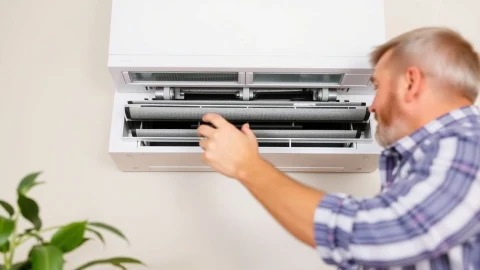
Step 2: Open the front panel. Most indoor units have a front panel that lifts up on hinges. Look for small tabs or release buttons on the sides. Lift gently. Don't force it.
Step 3: Slide out the filters. The mesh filters typically sit in tracks or behind small retaining tabs. Slide them downward and out. Note their orientation: most have a "this side up" or "airflow direction" marking.
Step 4: Remove loose dust. Before washing, shake the filters gently over a trash can or vacuum them with a brush attachment. This removes the bulk of the dust and prevents clogging your drain.
Step 5: Wash with lukewarm water. Hold the filter under running lukewarm water. For light dust, water alone is sufficient. For greasy or sticky buildup (common in kitchen-adjacent rooms), add a few drops of mild dish soap and gently scrub with a soft brush.
Never use:
- Hot water (can warp the plastic mesh frame)
- Harsh chemicals or solvents
- Pressure washers or strong water pressure
- Abrasive scrubbers or steel wool
Step 6: Rinse thoroughly. If you used soap, rinse until the water runs clear with no suds.
Step 7: Shake off excess water and air dry. Stand the filters upright or lay them on a towel. Let them dry completely before reinstalling. Never put wet filters back in the unit. A damp filter in a dark enclosure is a mold factory.
Drying time: 15-30 minutes in a well-ventilated area, or 5 minutes in direct sunlight (UV exposure also helps kill bacteria).
Step 8: Reinstall and close up. Slide the filters back into their tracks, ensure they're seated properly, close the front panel, and restart your system.
How Often Should You Clean Your Filters?
There's no single answer. It depends on your environment. Here's a practical guide:
Every 2 Weeks
- Homes with multiple pets (especially cats: cat hair is fine and clogs quickly)
- Dusty environments (near construction, unpaved roads, arid climates)
- High-use seasons (system running 12+ hours daily)
- Allergy sufferers who need optimal air quality
Every 4 Weeks (Monthly)
- Average homes with 1-2 occupants
- Standard use during peak seasons
- Moderate pet ownership (one dog or cat)
Every 6-8 Weeks
- Light-use periods (spring and fall in moderate climates)
- Low-dust environments with good home sealing
- Vacation homes or rarely used rooms
The Easy Test
Not sure if your filters need cleaning? Pull them out and hold them up to a light source. If you can see light clearly through the mesh, they're fine. If the mesh looks gray or opaque, it's time to clean.
Specialty Filter Maintenance
Activated Carbon Filters
- Cannot be washed: washing removes the activated carbon coating
- Replace every 6-12 months depending on odor exposure
- Some can be "refreshed" by placing in direct sunlight for 2-3 hours, but this only partially restores effectiveness
- Cost: $10-$30 per filter depending on brand
Catechin Filters
- Can be gently vacuumed to remove surface dust
- Do not wash: water degrades the catechin coating
- Replace every 12 months or when discolored
- Cost: $8-$20 per filter
Ion and Photocatalytic Filters
- Most can be washed gently with water and air-dried
- Check manufacturer instructions: some are washable, others are not
- Replace every 12-24 months depending on type
- Cost: $15-$40 per filter
Signs Your Filters Need Attention
Don't wait for a schedule if you notice any of these warning signs:
- Reduced airflow: The system seems weaker than usual even on high fan speed
- Visible dust buildup: You can see dust on the louvers or front panel
- Musty or stale odor: Dirty filters harbor bacteria and mold
- Increased energy bills: The system works harder to push air through clogged filters
- Ice formation on the indoor coil: Severely restricted airflow causes the coil to overcool and freeze
- Water leaking from the unit: Ice melting from a frozen coil overflows the drain pan
- Allergy symptoms worsening: The filters aren't capturing allergens effectively
What Happens When Filters Are Neglected
The consequences escalate over time:
Week 1-4 of neglect: Minor dust buildup, slight efficiency decrease. Barely noticeable.
Month 2-3: Airflow drops noticeably. The system runs longer to maintain temperature. Energy bills increase 5-10%.
Month 4-6: Heavy dust coating on the evaporator coil behind the filters. Coil efficiency drops significantly. Condensate drainage may be affected as dust enters the drain pan. Energy bills up 15-25%.
Month 6-12: Potential mold growth on the coil and in the drain pan. Musty odors. The blower motor works harder, shortening its lifespan. The compressor runs hotter and longer. Risk of component failure increases dramatically.
Year 2+: Deep coil contamination requiring professional chemical cleaning ($150-$300). Potential compressor damage from chronic overwork. The system's rated efficiency is permanently reduced until coils are professionally cleaned.
Pro Tips for Filter Management
- Keep a spare set of filters: Some brands sell replacement mesh filters for $10-$20. Having a spare set means you can swap immediately and wash at your convenience.
- Set a phone reminder: The simplest fix for "I forgot." Set recurring reminders for every 2 or 4 weeks.
- Clean all filters in a multi-zone system at once: If you have 3-4 indoor units, do them all the same day.
- Inspect the coil while filters are out: Take 10 seconds to look at the evaporator coil. If it looks dirty, it's time for a deeper clean.
- Mark the date on the filter: Use a permanent marker to write the last cleaning date on the filter frame.
The Bottom Line
Cleaning your mini split filters is the highest-ROI maintenance task you can do as a homeowner. Five minutes of effort every few weeks protects a system worth thousands of dollars, keeps your air clean, and prevents the cascading problems that lead to expensive repairs.
Make it a habit. Your mini split, and your energy bill, will thank you.