Mini Split Noise Troubleshooting: Clicks, Buzzes & Rattles
One of the best things about mini splits is how quiet they are. Modern indoor units operate at 19-26 decibels on low settings, quieter than a whisper. So when your mini split starts making unfamiliar sounds, it's understandably alarming.
The good news: not every sound means something is wrong. Mini splits make a variety of normal operational noises. The key is knowing which sounds are part of normal operation and which ones signal a problem that needs attention.
Here's your complete guide to every common mini split noise: what causes it, whether it's normal, and what to do about it.
Normal Sounds You Can Ignore
Let's start with the sounds that are completely normal. Understanding these will save you unnecessary worry (and unnecessary service calls at $100+ each).
Soft Whooshing or Humming
The indoor fan produces a soft, consistent whooshing sound during operation. This is the sound of air moving through the coil and out the louvers. Louder at higher fan speeds, barely audible on low. This is completely normal.
Clicking at Startup and Shutdown
A few clicks when the system turns on or off are normal. This is the sound of:
- The compressor relay engaging or disengaging
- The expansion valve opening or closing
- Plastic housing expanding or contracting from temperature changes
Normal: 2-3 soft clicks at startup or shutdown Abnormal: Rapid, continuous clicking, or loud clicking during operation
Soft Gurgling or Whooshing (Refrigerant Flow)
A subtle gurgling or liquid-flowing sound is refrigerant moving through the expansion valve and evaporator coil. It's more noticeable during:
- Startup (as refrigerant pressure equalizes)
- Mode changes (switching between heating and cooling)
- Defrost cycles (in heating mode)
Normal: Occasional, soft, and brief Abnormal: Loud, continuous, or accompanied by reduced performance
Plastic Creaking
Temperature changes cause the plastic housing of the indoor unit to expand and contract slightly. You might hear occasional creaks or soft pops, especially when the system first starts cooling or heating. Completely normal, similar to how a house settles.
Problem Sounds: When to Investigate
Loud or Continuous Clicking
What you hear: Rapid, repetitive clicking from the outdoor unit, often without the compressor actually starting.
Likely causes:
- Failing capacitor: The run or start capacitor is trying to energize the compressor but can't deliver enough power. The relay clicks on, the compressor can't start, the relay clicks off, and the cycle repeats.
- Faulty contactor: The electrical contactor that supplies power to the compressor is worn, creating an intermittent connection.
- Low voltage: Insufficient power reaching the unit causes repeated start attempts.
Urgency: Medium-High. The compressor is being stressed with each failed start attempt. Call a technician: capacitor and contactor replacements are typically $150-$300 including labor.
Buzzing from the Outdoor Unit
What you hear: A persistent electrical buzzing or humming from the condenser, sometimes vibrating.
Likely causes:
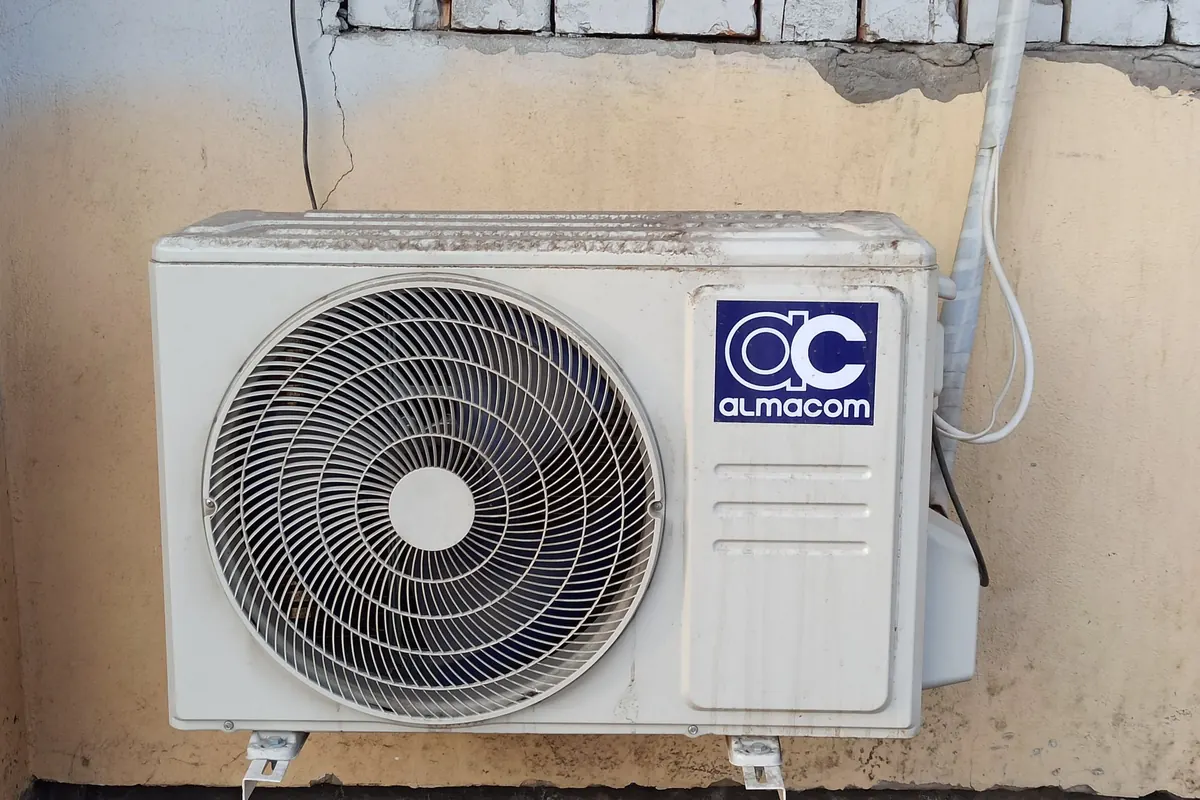
- Loose mounting hardware: The most common cause. Vibration from the compressor loosens bolts over time. Check and tighten all mounting bolts and screws.
- Debris in the fan: A twig, leaf, or piece of debris touching the fan blade creates intermittent buzzing/ticking. Turn off the unit and inspect.
- Failing fan motor: Worn bearings in the condenser fan motor create a buzzing hum that worsens over time.
- Electrical issues: Loose wiring connections create resistance that buzzes as current flows. This is a safety concern.
- Failing compressor: In severe cases, a dying compressor produces a loud electrical buzz.
DIY fix: Tighten mounting hardware and clear debris. Call a pro if: Buzzing persists after tightening, or if it's accompanied by the unit not cooling/heating properly.
Rattling
What you hear: A loose, metallic or plastic rattling, either from the indoor or outdoor unit.
Indoor unit causes:
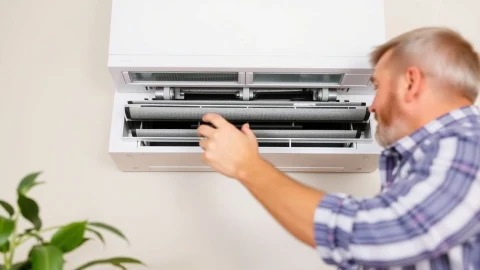
- Loose front panel: The panel wasn't properly clicked back into place after filter cleaning. Open and reseat it.
- Foreign object in the unit: Small items (pens, toys) can fall into the gap between the wall and unit and rattle against the housing.
- Loose mounting plate: If the wall bracket has loosened, the entire unit may vibrate. This is a falling hazard. Address immediately.
Outdoor unit causes:
- Loose screws on the housing panels: Tighten with a screwdriver or socket wrench.
- Loose refrigerant lines: The copper tubing vibrates against mounting clamps or wall surfaces. Adjust clamp placement or add rubber dampeners.
- Compressor isolation mounts degrading: The rubber isolators that dampen compressor vibration wear out over time, transmitting vibration to the chassis.
High-Pitched Squealing or Screeching
What you hear: A sharp, high-pitched sound from the indoor or outdoor unit.
Likely causes:
- Indoor unit: Fan motor bearing failure: The barrel fan motor's bearings are wearing out. The sound will worsen over time and can eventually cause the motor to seize.
- Outdoor unit: Compressor under stress: High-pressure conditions (dirty condenser coils, restricted airflow) cause the compressor to work abnormally hard.
- Belt issues (rare in mini splits, most are direct-drive): If present, a worn belt slips and squeals.
Urgency: High. Squealing bearings will eventually fail completely. Schedule service promptly: catching it early means a $200-$400 motor replacement vs. emergency failure at the worst possible time.
Hissing
What you hear: A steady or intermittent hissing from the indoor unit, outdoor unit, or line set.
Likely causes:
- Normal expansion valve operation: A slight hissing as refrigerant passes through the valve is normal, especially at startup.
- Refrigerant leak: A persistent hiss from a connection point or the line set indicates refrigerant escaping. Check for oil stains near connections (refrigerant carries oil).
- Air leak through the wall penetration: Wind pushing through an improperly sealed wall hole creates a hissing or whistling sound.
How to distinguish: Turn the system off. If the hissing continues briefly and fades, it may be refrigerant equalizing pressure (normal). If it stops immediately, it was likely airflow-related. If it's constant regardless of system state, suspect a refrigerant leak.
Refrigerant leak urgency: High. Loss of refrigerant reduces performance and can damage the compressor. Call a technician for leak detection and repair.
Gurgling or Bubbling
What you hear: Loud, persistent gurgling from the indoor unit or line set.
Likely causes:
- Low refrigerant charge: Insufficient refrigerant creates air pockets in the line set that produce gurgling as refrigerant flows past them. This is the most common cause.
- Kinked or restricted line set: A partial blockage creates turbulence and bubbling sounds.
- Condensate drain backing up: Water trapped in the drain system can create gurgling, especially if the drain line has a section where air gets trapped.
Urgency: Medium. Low refrigerant means a leak exists somewhere. Schedule a service call for leak detection and recharging.
Banging or Clanking
What you hear: Loud, metallic banging from the outdoor unit.
Likely causes:
- Loose or broken compressor mount: The compressor has shifted on its internal mounts and is physically hitting the housing.
- Broken fan blade: A cracked blade is imbalanced and hitting surrounding components.
- Liquid slugging: Liquid refrigerant entering the compressor (instead of vapor) creates hammering sounds. This is often caused by a malfunctioning expansion valve or extremely low outdoor temperatures without proper low-ambient controls.
Urgency: High. Banging can cause catastrophic compressor damage. Turn the system off and call a technician immediately.
Noise Reduction Tips
Even for normal operational sounds, you can minimize noise:
- Use rubber isolation pads under the outdoor unit to dampen vibration
- Ensure the outdoor unit is on a level, stable surface: an unlevel unit vibrates more
- Keep the outdoor unit away from bedroom windows: even a few extra feet makes a difference
- Run the indoor unit on lower fan speeds at night: most units have a "quiet" or "sleep" mode that reduces fan speed
- Tighten all visible screws and mounting hardware seasonally
- Keep the line set properly supported with clamps every 3-4 feet
When to Call a Professional
Call immediately if:
- Loud banging or clanking from the outdoor unit
- Burning smell accompanying any noise
- The system trips a breaker while making noise
- Hissing combined with reduced cooling/heating performance
Schedule service soon if:
- Persistent buzzing that doesn't resolve with tightening
- Squealing or screeching sounds
- Gurgling combined with reduced performance
- Any new sound that's getting progressively worse
Handle yourself:
- Tighten loose panels and mounting hardware
- Clear debris from outdoor unit
- Reseat the front panel after filter cleaning
- Check and seal the wall penetration
The Bottom Line
Your mini split communicates through its sounds. Learning to distinguish normal operational noises from warning signs empowers you to act early, before a $150 fix becomes a $1,500 repair. When in doubt, a short video recording of the sound is invaluable for a technician to diagnose the issue, even over the phone.